
Recent Blog
Transform Your Business with Grow Branding!
Grow Your Brand Online Presence. Take Your First Step To Boost Your Brand Growth Marketing.
Junk Removal Growth Guide
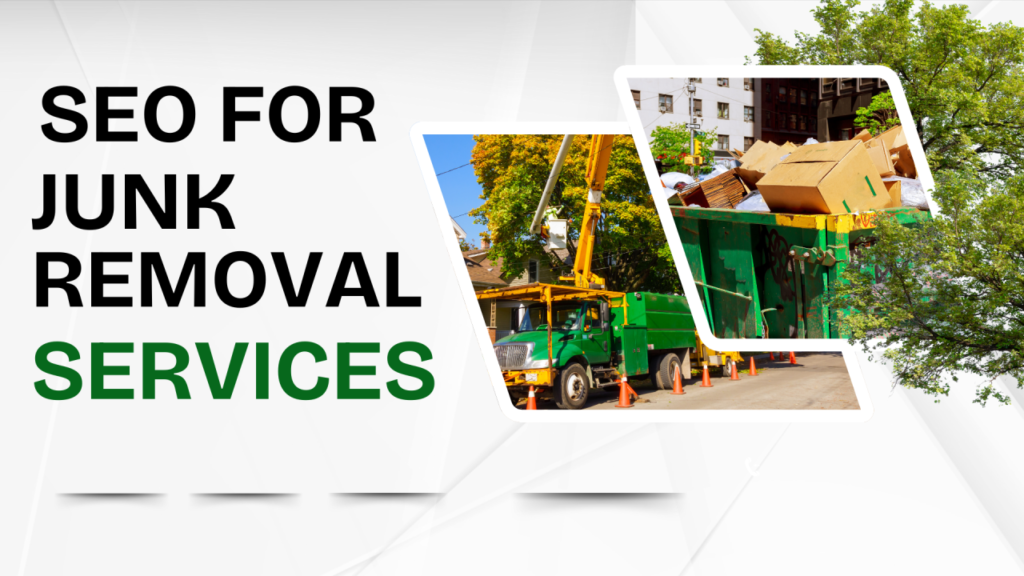
Junk Removal SEO Checklist: 50 Actionable Items
A practical 50-point SEO checklist to improve junk removal visibility across Google Search and Maps, strengthen local trust, convert more visitors, and turn qualified searches into calls, booked jobs, and measurable revenue.
Article Introduction
Running a junk removal business is already enough work without trying to decode Google at 11 PM after spending the day hauling couches, mattresses, and someone’s suspiciously heavy “small box.”
The good news? Junk removal SEO doesn’t have to be complicated.
At its core, junk removal SEO is the process of improving your visibility across Google Search, Google Maps, and other search platforms so local customers can find your business when they need something removed. A strong strategy combines Google Business Profile optimization, service and location pages, technical SEO, reviews, local authority, useful content, and conversion tracking.
✧ Quick Overview
This junk removal SEO checklist covers 50 practical actions across five areas:
- Google Business Profile optimization
- Website and on-page SEO
- Technical and conversion SEO
- Local content and topical authority
- Reviews, citations, backlinks, and local authority
You’ll also find a practical 30-day SEO priority plan and answers to common junk removal SEO questions.
You do not need to become an SEO scientist.
You need to make it extremely easy for Google to understand what you do, easy for local customers to trust you, and even easier for those customers to call or request a quote.
Here’s where to start.
1. Google Business Profile Optimization
✧ 1. Verify Your Google Business Profile
Make sure you own and control the correct Google Business Profile before making major changes.
No ownership means no real control over one of your most valuable local search assets—and arguing with an old login email from 2019 is not an SEO strategy.
✧ 2. Complete Every Important GBP Field
Fill out your:
- Business hours
- Phone number
- Website
- Business description
- Services
- Service areas
- Business information
Don't leave Google guessing. It has enough businesses to figure out already.
✧ 3. Choose the Right Primary Category
Choose the category that most accurately represents your core business, usually Junk Removal Service when appropriate.
Your primary category helps Google understand what type of searches your company should be considered for.
✧ 4. Add Relevant Secondary Categories
Use secondary categories only when they accurately describe services you genuinely offer.
More categories are not automatically better.
You want relevance, not a Google Business Profile that looks like your company removes junk, rents dumpsters, moves houses, repairs refrigerators, and performs dental surgery.
✧ 5. Configure Your Service Areas Properly
Add cities and areas that you realistically serve.
A junk removal company located in Raleigh doesn't become nationally competitive because someone added half the United States to the service-area settings.
Focus on markets where you can actually complete profitable jobs.
✧ 6. Add Your Core Services
List important services such as:
- Furniture removal
- Appliance removal
- Mattress removal
- Garage cleanouts
- Estate cleanouts
- Office cleanouts
- Construction debris removal
Use the same language real customers use when looking for these services.
✧ 7. Write a Clear Business Description
Explain:
- What you remove
- Where you work
- Who you help
- What makes your company different
Write it for customers first.
Nobody needs to read “best affordable professional junk removal near me experts” six times to understand that you haul junk.
✧ 8. Upload Real Job Photos
Show actual:
- Trucks
- Crews
- Before-and-after jobs
- Cleanouts
- Equipment
- Completed projects
Your own slightly muddy truck beside a real completed job usually builds more trust than a perfectly polished stock photo of three models pretending to carry an empty cardboard box.
✧ 9. Keep Adding Fresh Photos
Don't upload 15 photos when the profile is created and then disappear for three years.
Keep adding real project photos as jobs are completed.
An active business should look active online.
✧ 10. Respond to Every Review
Thank happy customers and respond professionally to criticism.
Potential customers read review responses too.
They're not only asking, “Did this company receive five stars?”
They're also asking, “What happens if something goes wrong?”
2. Website & On-Page SEO
✧ 11. Give Every Important Page One Clear Search Intent
Don't ask a single page to rank for:
- Junk removal
- Demolition
- Dumpster rentals
- Moving
- Estate cleanouts
- Commercial hauling
- Everything else you've ever done
One strong page should solve one primary searcher's problem.
Trying to make one page rank for everything is like trying to fit an entire house cleanout into the passenger seat.
✧ 12. Create Dedicated Service Pages
Build individual pages for valuable services customers actively search for.
Examples include:
- Furniture removal
- Appliance removal
- Hot tub removal
- Estate cleanouts
- Garage cleanouts
- Commercial junk removal
Don't bury five profitable services inside a 150-word generic “Services” page.
✧ 13. Use Clear Page Titles
Your title should clearly communicate the main service and relevant location where appropriate.
For example:
Furniture Removal in Raleigh, NC | Company Name
Clarity wins.
✧ 14. Write One Descriptive H1
Your H1 should immediately tell visitors what the page is about.
Don't sacrifice readability because somebody told you that squeezing four variations of “junk removal Raleigh” into a heading is SEO.
✧ 15. Improve Meta Descriptions
Write meta descriptions that communicate:
- The service
- The location
- A reason to click
Rankings get you seen.
Your search snippet still needs to convince the person holding the phone to choose you.
✧ 16. Put the Answer Near the Top
Tell visitors quickly:
- What you do
- Where you work
- How the process works
- How to get a quote
Someone standing beside a broken sofa they want gone today does not need a 900-word philosophical introduction to the history of unwanted furniture.
✧ 17. Add Click-to-Call CTAs
Make phone numbers easy to tap from mobile devices.
Use visible calls to action near important decision points.
Every unnecessary step between “I need this junk gone” and “Call” gives the customer another opportunity to leave.
✧ 18. Use Original Service Photos
Add real job photography throughout important pages.
Show the service actually happening.
“Reliable and professional” is a claim.
A photo of your team completing a difficult cleanout is evidence.
✧ 19. Optimize Image Information Naturally
Use useful filenames and descriptive alt text.
Instead of:
IMG\_839291.jpg
Use something like:
garage-cleanout-raleigh.jpg
Describe what the image actually contains rather than turning the alt text into a small keyword casserole.
✧ 20. Build Contextual Internal Links
Connect related:
- Service pages
- Location pages
- Blog articles
- Pricing resources
- FAQs
For example, an article explaining estate cleanout preparation should naturally link to your estate cleanout service.
Make your website feel like a connected resource rather than 37 pages that have never met each other.
3. Technical & Conversion SEO
✧ 21. Prioritize Mobile Usability
Open your major pages on an actual phone.
Check:
- Buttons
- Forms
- Navigation
- Font sizes
- Images
- Phone numbers
- Popups
Your developer's 27-inch monitor is not where most emergency “get this couch out before my landlord arrives” searches happen.
✧ 22. Improve Page Speed
Reduce oversized images, unnecessary scripts, bloated plugins, and poor hosting where needed.
If the customer can make coffee while your quote page loads, you may have a problem.
✧ 23. Use HTTPS
Make sure your entire website loads securely.
This is basic website hygiene.
In 2026, a business website throwing security warnings is roughly equivalent to greeting a customer at the door and immediately asking them not to worry about the smoke.
✧ 24. Submit an XML Sitemap
Maintain a current XML sitemap and submit it through Google Search Console.
It helps search engines discover important URLs more efficiently.
Your pages shouldn't require an archaeological expedition to find.
✧ 25. Check Important Pages for Indexing
Confirm that your major:
- Service pages
- Location pages
- Homepage
- Commercial pages
are eligible to appear in Google.
A perfectly optimized page sitting outside Google's index is basically a beautiful billboard stored inside your garage.
✧ 26. Fix Broken Pages and Links
Monitor:
- 404 errors
- Removed URLs
- Broken internal links
- Incorrect redirects
Redirect old URLs to the most relevant replacement when appropriate.
Don't send customers or Google into digital dead ends.
✧ 27. Avoid Duplicate Location Pages
Don't create 70 city pages by copying one template and changing nothing except the city name.
Add genuinely local information such as:
- Neighborhoods
- Relevant services
- Local job examples
- Photos
- Testimonials
- Disposal information
- Specific customer concerns
If every location page is the same paragraph wearing a different ZIP code, it isn't truly local content.
✧ 28. Use Canonicals Correctly
When similar URLs exist, use canonical tags appropriately to indicate the preferred version.
You don't want five versions of essentially the same page competing with each other like siblings fighting over the front seat.
✧ 29. Add Relevant Structured Data
Use accurate schema markup where applicable, including supported types such as:
- LocalBusiness
- Organization
- Service
- BreadcrumbList
- WebSite
- WebPage
Structured data can help machines understand your business.
It isn't a place to tell Google you're an award-winning international junk-removal empire if you're running one truck in Raleigh.
✧ 30. Track Conversions Properly
Track meaningful actions including:
- Phone calls
- Quote requests
- Forms
- Online bookings
- Qualified leads
- Booked jobs
Ten thousand visits and zero customers make an impressive chart and a terrible business result.
4. Local Content & Topical Authority
✧ 31. Build Pages for Your Main Markets
Create strong location pages for the cities and communities that commercially matter to your company.
Prioritize realistic markets instead of trying to plant a thin SEO flag in every city within 300 miles.
✧ 32. Make Location Pages Truly Local
Strengthen location pages with:
- Jobs completed in the area
- Neighborhood references
- Original photos
- Customer testimonials
- Relevant services
- Local FAQs
- Disposal or donation information
Don't simply tell Google you work there.
Prove it.
✧ 33. Create Item-Specific Content Where Demand Exists
Customers don't always search using industry terminology.
They search for the problem sitting in front of them:
- Couch removal
- Mattress removal
- Refrigerator removal
- Appliance pickup
- Hot tub removal
- Piano removal
Your content strategy should reflect how customers actually think.
Usually that thought is less “I require professional waste-management solutions” and more “Please make this refrigerator disappear.”
✧ 34. Build High-Value Cleanout Pages
Create dedicated pages around valuable services such as:
- Estate cleanouts
- Garage cleanouts
- Rental property cleanouts
- Office cleanouts
- Foreclosure cleanouts
Prioritize commercial value alongside search volume.
A keyword with fewer searches can be far more valuable if the average job is worth significantly more.
✧ 35. Explain Your Pricing Process
Even when exact pricing isn't possible, explain what affects the quote.
For example:
- Volume
- Weight
- Labor
- Accessibility
- Item type
- Disposal fees
- Travel distance
Pricing uncertainty stops people from contacting businesses.
Give them enough information to understand what happens next.
✧ 36. Build a Strong About Page
Show visitors who runs the company.
Include:
- Owner information
- Team photos
- Real trucks
- Experience
- Company story
- Community involvement
- Licenses or insurance where relevant
People are considering inviting your crew onto their property.
“About Us: We provide quality solutions” is not exactly an intimate introduction.
✧ 37. Showcase Before-and-After Jobs
Document completed projects.
A cluttered garage followed by a clean, usable space communicates the value of junk removal instantly.
Sometimes two photographs can do what 600 words of “we care about quality” cannot.
✧ 38. Answer Real Customer Questions
Listen to the questions your customers ask before jobs.
Those questions can become:
- FAQ content
- Articles
- Service-page sections
- Videos
- Google Business Profile content
Your customers are basically handing you content ideas for free.
Accept the gift.
✧ 39. Publish Useful Educational Content
Create resources covering topics such as:
- What junk removal companies take
- What they don't take
- Donation options
- Recycling
- Cleanout preparation
- Junk removal pricing
- Same-day removal
- Estate cleanout planning
Don't publish because a content calendar says Tuesday requires a blog post.
Publish because a customer has a real question worth answering.
✧ 40. Connect Informational Content to Services
Your educational content should naturally guide interested readers toward the relevant service.
For example:
How to Prepare for an Estate Cleanout → Estate Cleanout Service
Information attracts attention.
The commercial page gives that attention somewhere useful to go.
5. Reviews, Citations & Local Authority
✧ 41. Build a Consistent Review Process
Ask satisfied customers for reviews as part of your normal operating process.
Don't wait until you suddenly realize your last review arrived eight months ago.
Build the request into the customer journey.
✧ 42. Keep Business Information Consistent
Audit your:
- Business name
- Phone number
- Website
- Address where applicable
- Hours
- Service information
across important platforms.
Google shouldn't have to solve a detective novel to determine whether “Mike's Junk Removal,” “Mike's Hauling LLC,” and “Mike Removes Stuff 24/7” are the same company.
✧ 43. Claim Important Business Profiles
Build profiles on legitimate local, business, and industry platforms that matter to customers.
Prioritize relevance and quality.
You do not need 600 listings on websites last visited by a human during the dial-up era.
✧ 44. Join Relevant Local Organizations
Look at legitimate:
- Chambers of commerce
- Business associations
- Community organizations
- Neighborhood groups
- Industry groups
These relationships can create visibility, referrals, mentions, and links.
The best local SEO tactics often look suspiciously like ordinary good business development.
✧ 45. Build Relationships With Property Managers
Property managers regularly encounter:
- Tenant move-outs
- Abandoned furniture
- Rental cleanouts
- Property turnovers
A relationship that begins as a local citation or backlink opportunity could eventually become recurring work.
That's considerably more interesting than collecting backlinks for the sake of a spreadsheet.
✧ 46. Connect With Real Estate Professionals
Build relationships with:
- Realtors
- Investors
- Estate professionals
- Contractors
- Movers
- Storage businesses
Look for businesses serving the same customer before or after they need junk removal.
Good partnerships can generate both authority and revenue.
✧ 47. Build Donation and Recycling Relationships
Work with legitimate organizations when reusable items can be donated or recycled.
These relationships can strengthen:
- Operations
- Community visibility
- Brand reputation
- Content opportunities
- Local authority
They also give you something meaningful to say beyond “we make junk disappear.”
✧ 48. Earn Local Media Mentions
Give local publishers an actual reason to mention the business.
Possibilities include:
- Community cleanups
- Charitable projects
- Interesting local data
- Unusual removal projects
- Expert advice
- Environmental initiatives
Create something worth covering first.
The backlink is the dessert, not dinner.
✧ 49. Strengthen Your Brand Across the Web
Keep your:
- Business description
- Services
- Contact information
- Imagery
- Brand positioning
- Company details
consistent across important platforms.
Google and AI systems should encounter the same recognizable company wherever your brand appears online—not five slightly different versions that appear to have never spoken to each other.
✧ 50. Track Booked Jobs, Not Just Rankings
SEO reporting should connect visibility to business results.
Track the journey:
Search visibility → Website/GBP engagement → Calls → Quote requests → Qualified leads → Booked jobs → Revenue
Rankings matter.
Traffic matters.
Impressions matter.
But none of them can pay the truck payment until somebody books a job.
A Practical 30-Day Junk Removal SEO Priority Plan
Fifty items can look intimidating.
You don't need to attack all of them Monday morning while simultaneously answering calls, sending estimates, managing crews, and wondering who left a broken dresser in the truck.
✧ Week 1: Fix Your Google Business Profile
Audit your:
- Primary category
- Secondary categories
- Services
- Service areas
- Hours
- Phone number
- Website
- Business description
- Photos
- Reviews
Correct inaccurate information and complete important missing fields.
Then start adding fresh photos and responding to reviews consistently.
Your Google Business Profile is often the first impression a local customer gets of your business. Treat it accordingly.
✧ Week 2: Improve Your Highest-Value Website Pages
Start with:
- Homepage
- Core junk removal page
- Highest-value services
- Main location pages
- Contact or quote page
Improve:
- Titles
- Headings
- Search intent
- Content
- Internal links
- Photos
- Trust signals
- CTAs
Don't begin by publishing 25 blog posts.
Fix the pages closest to making money first.
✧ Week 3: Fix Technical and Conversion Problems
Check:
- Mobile usability
- Loading speed
- Broken links
- Indexing
- HTTPS
- XML sitemap
- Quote forms
- Click-to-call buttons
- Call tracking
- Conversion tracking
SEO can bring the customer to the door.
A broken website can politely send them straight back to Google.
✧ Week 4: Build Local Authority
Start working on:
- Google reviews
- Major citations
- Relevant business profiles
- Local partnerships
- Local backlinks
- Supporting content
- Brand mentions
Turn these activities into a monthly system.
Authority becomes much more valuable when it compounds instead of arriving in one heroic burst every six months.
✧ After 30 Days: Review What Actually Changed
Measure the full funnel:
Google Maps visibility → Organic visibility → Website engagement → Calls → Quote requests → Qualified leads → Booked jobs → Revenue
Then decide what deserves attention next.
Maybe Maps visibility is weak.
Maybe customers are finding you but not calling.
Maybe calls are increasing but the wrong service pages are attracting them.
SEO shouldn't be a monthly ritual where everyone performs the same tasks because “that's what we did last month.”
Let the business results tell you what to fix next.
Frequently Asked Questions About Junk Removal SEO
What Is Junk Removal SEO?
Junk removal SEO is the process of improving a junk removal company's visibility when customers search online for services such as junk removal, furniture removal, appliance removal, estate cleanouts, and related local services.
It typically includes:
- Google Business Profile optimization
- Local SEO
- Service-page optimization
- Location pages
- Technical SEO
- Reviews
- Citations
- Backlinks
- Helpful content
The objective isn't simply generating website traffic. It's connecting your business with local people actively searching for the services you provide.
How Do I Get My Junk Removal Business to Rank Higher on Google?
Start by strengthening the fundamentals:
- Optimize your Google Business Profile
- Create strong service pages
- Build useful location pages
- Generate genuine customer reviews
- Keep business information consistent
- Fix technical SEO problems
- Earn relevant local authority
- Publish useful supporting content
There usually isn't one magical ranking trick.
It's several strong signals working together—which is admittedly less exciting than discovering a secret button labeled Rank #1, but considerably more realistic.
How Can I Rank My Junk Removal Company in Google Maps?
Start with an accurate and complete Google Business Profile.
Pay particular attention to:
- Categories
- Services
- Business information
- Reviews
- Photos
- Website
- Service areas
Then strengthen the website and local authority supporting the profile.
Google Maps optimization should not happen in isolation from your broader online presence.
What Keywords Should a Junk Removal Business Target?
Your keyword strategy may include searches such as:
- Junk removal + city
- Junk hauling + city
- Junk removal near me
- Furniture removal
- Appliance removal
- Mattress removal
- Estate cleanouts
- Garage cleanouts
- Construction debris removal
Also research specific high-value services your company provides.
Build the strategy around customer problems, local intent, and profitable services, not keyword volume alone.
Should Every Junk Removal Service Have Its Own Page?
Not necessarily.
Major services usually deserve dedicated pages when:
- Customers actively search for them
- They have meaningful commercial value
- You can provide enough unique information
- The search intent differs from your general junk removal page
You do not need a separate page for every object ever manufactured.
“Yellow Plastic Patio Chair Removal” probably doesn't need its own SEO campaign.
Should I Create a Page for Every City I Serve?
No.
Prioritize commercially important markets where you can create genuinely useful location-specific content.
A strong location page should contain more than the city name.
Consider including:
- Local job examples
- Neighborhoods
- Relevant services
- Testimonials
- Photos
- FAQs
Ten useful location pages can outperform 100 nearly identical pages built only to target city keywords.
How Do Reviews Help Junk Removal SEO?
Reviews can strengthen customer trust and contribute to the overall prominence of your business in local search.
They also help potential customers compare companies before contacting one.
That's important because customers aren't viewing your business in isolation.
They may be looking at your profile, three competitors, a couple of websites, reviews, photos, and possibly asking an AI platform for recommendations before they call anybody.
How Often Should I Post on My Google Business Profile?
There is no magical posting schedule that guarantees higher rankings.
Post when you have genuinely useful things to share, including:
- Completed projects
- Seasonal services
- Offers
- Business updates
- Helpful advice
Consistency is useful.
Posting three paragraphs every Thursday simply because Thursday exists is less useful.
How Long Does Junk Removal SEO Take?
There is no universal timeline.
Results depend on factors including:
- Current rankings
- Competition
- Market size
- Website condition
- Google Business Profile strength
- Reviews
- Local authority
- Existing content
- Technical problems
SEO should generally be approached as a process of compounding improvements rather than an overnight ranking event.
If someone guarantees that every keyword will hit #1 next Tuesday, keep one hand on your wallet.
Is Local SEO Worth It for a Junk Removal Company?
Local SEO can be particularly valuable for junk removal companies because many searches have immediate commercial intent.
Someone searching:
“junk removal near me”
or:
“couch removal Raleigh”
may already have an item they want removed and be comparing businesses to hire.
That is very different from interrupting someone on social media who was peacefully watching dog videos five seconds earlier.
How Should I Measure Junk Removal SEO Results?
Don't measure SEO only through keyword positions.
Track:
- Google Maps visibility
- Organic visibility
- Website traffic
- Calls
- Quote requests
- Qualified leads
- Booked jobs
- Revenue from organic search
A ranking report tells you whether visibility changed.
Revenue data tells you whether the change mattered.
Can Junk Removal SEO Help With AI Search Visibility?
A strong SEO and brand foundation can also help AI-driven search systems discover, understand, and verify information about your business.
Important signals can include:
- Clear service information
- Consistent business/entity information
- Strong website pages
- Customer reviews
- Useful topical content
- Credible third-party mentions
- Consistent brand information across the web
The goal is to create a business entity that search engines and AI systems can clearly recognize and understand.
Google shouldn't think you're one business, directories another, and AI search a mysterious third company that may or may not own a truck.
The Most Important Takeaway
Don't treat this junk removal SEO checklist as 50 unrelated tricks.
The strongest strategy connects everything:
Google Business Profile → Google Search and Maps visibility → Service and location content → Trust → Call or quote → Booked job
Start with the areas closest to revenue:
Google Business Profile + Core service pages + Important locations + Reviews + Conversion paths + Tracking
Then build authority around them.
Because the real goal isn't to impress an SEO tool with 47 green checkmarks.
It's much simpler:
Preferably before they call the guy down the street.
Junk Removal SEO Checklist