
Recent Blog
Transform Your Business with Grow Branding!
Grow Your Brand Online Presence. Take Your First Step To Boost Your Brand Growth Marketing.
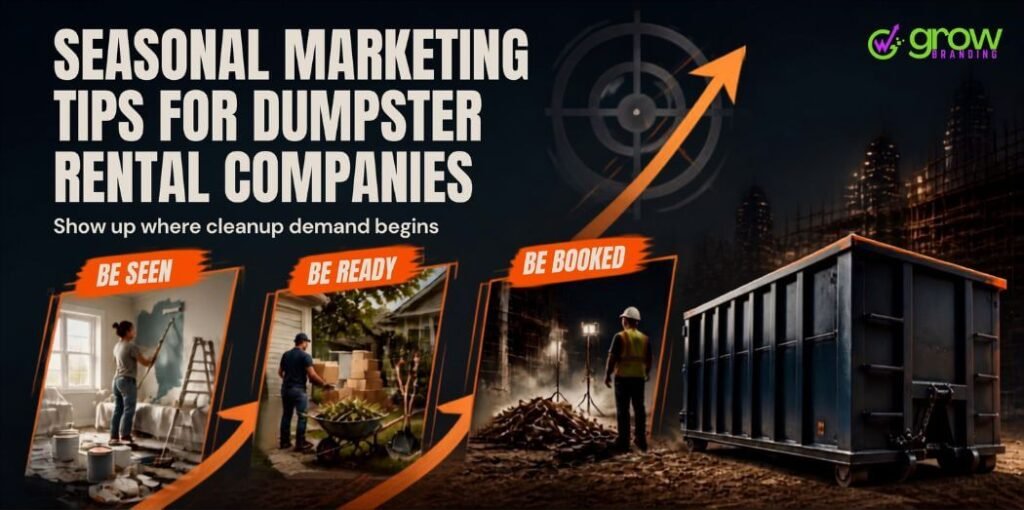
Seasonal Marketing Tips for Dumpster Rental Companies
Seasonal dumpster rental marketing works best when campaigns follow local demand, start before peaks, align with available capacity, and are measured by booked rentals and revenue rather than generic seasonal assumptions.
Dumpster rental demand doesn’t follow the same pattern in every city. Climate, construction activity, moving patterns, local events, storms, customer mix, and the types of projects common in your service area can all change when people need a container.
That’s why the best seasonal marketing tips for dumpster rental companies aren’t simply “advertise spring cleaning in March.”
A stronger approach is to identify what customers are preparing to do, start promoting before demand peaks, and connect every campaign to the dumpsters, drivers, delivery windows, and service areas you can actually support.
Build Your Seasonal Marketing Plan From Local Demand, Not Assumptions
Spring and summer are commonly associated with cleanouts, construction, renovations, and outdoor projects, while fall and winter can bring different cleanup and remodeling needs. But those patterns aren’t universal. A dumpster company in a warm southern market may have a completely different calendar from an operator serving a region with long winters.
Start with your own numbers.
Compare the last one to three years of:
- Quote requests by month.
- Completed rentals by month.
- Dumpster sizes rented.
- Residential versus commercial jobs.
- Customer ZIP codes or cities.
- Project types.
- Revenue per rental.
- Lead sources.
- Cancellations or unavailable inventory.
Then compare that information with search behavior. Google Trends lets you explore changes in search interest across time and locations, while Google Search Console performance reports can show which queries brought your own site impressions and clicks.
You may discover, for example, that searches related to garage cleanouts rise before your construction rentals do, or that one service area starts its outdoor-project season earlier than another.
Spring Dumpster Rental Marketing: Get Ahead of Cleanup and Project Demand
Spring gives dumpster rental businesses several natural campaign angles: household cleanouts, remodeling projects, property maintenance, landscaping debris where permitted, and construction work restarting after winter in colder markets.
The important part is timing.
Don’t wait until customers are already trying to book.
Begin preparing spring content and campaigns several weeks before your historical demand starts climbing.
✧ Build Campaigns Around Specific Spring Projects
Generic ads such as “Rent a Dumpster This Spring” don’t tell the customer why they need you.
More useful campaign themes include:
- Garage and basement cleanouts.
- Pre-move decluttering.
- Home remodeling.
- Roofing or exterior projects.
- Rental-property cleanup.
- Construction debris.
- Large residential cleanouts.
Only advertise debris types your company actually accepts. Disposal rules, weight restrictions, container requirements, and prohibited materials can vary by provider and jurisdiction.
Each campaign should send the visitor to a page that explains the relevant service, service area, container options, booking process, and next step.
That approach also supports the broader principles behind building a lead-focused junk removal website: visitors should be able to understand what you do, where you work, and how to request service without digging through the site.
✧ Start Contractor Outreach Before Schedules Fill Up
Spring is also a useful time to reconnect with remodelers, roofers, landscapers, property managers, restoration companies, and other businesses that may repeatedly need disposal capacity.
The pitch shouldn’t simply be “we rent dumpsters.”
Speak to the operational problems a repeat customer cares about:
- Dependable delivery.
- Predictable pickup.
- Clear communication.
- Appropriate container options.
- Defined service areas.
- Straightforward ordering.
If a contractor can become a recurring account, that relationship may be more valuable than continually paying to acquire one-off leads.
Summer Marketing: Compete for Construction, Moving, and Property Projects
In markets where summer brings heavier project activity, marketing should become more focused rather than simply becoming louder.
You may be competing for homeowners, contractors, landlords, property managers, and businesses at the same time. Separate those audiences whenever possible.
A homeowner renovating a kitchen has different questions from a contractor managing multiple jobsites.
✧ Segment Your Summer Paid Search Campaigns
Instead of placing every keyword into one campaign, organize advertising around meaningful intent.
For example:
✧ Residential
- Home cleanout dumpster.
- Remodeling dumpster.
- Moving cleanout.
- Garage cleanout.
✧ Construction and Trades
- Construction dumpster rental.
- Roofing dumpster.
- Contractor roll-off rental.
- Jobsite dumpster.
✧ Location
- Dumpster rental in [city].
- Roll-off dumpster in [service area].
The landing page should then continue the same conversation.
Grow Branding’s guide to local advertising ideas for junk removal businesses follows a similar local-intent principle: match advertising to the service and location instead of sending every visitor into one generic path.
✧ Don’t Promote Capacity You Don’t Have
Summer marketing can create a problem if the campaign works better than operations can handle.
Before increasing advertising, ask:
- Which dumpster sizes are usually available?
- What areas can drivers serve efficiently?
- How far ahead are deliveries booking?
- Are pickup delays becoming common?
- Which jobs are most profitable?
- Which areas create excessive route time?
If 20-yard dumpsters are consistently unavailable, continuing to spend aggressively on ads centered on that option may create frustrated callers instead of profitable rentals.
Seasonal marketing and dispatch planning should work from the same information.
Fall Marketing: Target Cleanup and Pre-Winter Projects
Fall gives operators another set of project-driven marketing angles.
Depending on your market and accepted materials, these may include property cleanup, yard projects, remodeling, roofing, rental-property turnover, pre-winter maintenance, and pre-holiday decluttering.
This is also a good time to reactivate previous customers.
Someone who rented for a spring remodel may now have another property project. A contractor who used your company earlier in the year may have work to finish before colder weather arrives.
✧ Use Your Existing Customer List
Email and SMS campaigns can focus on relevance instead of constant discounts.
Examples include:
- Fall project scheduling reminders.
- Updated service-area information.
- Dumpster availability notices.
- Contractor scheduling reminders.
- Pre-holiday cleanout messages.
- Information about accepted materials.
- Educational content about choosing a dumpster size.
Past customers already know the business. The goal is to give them a reason to think of you when the next project appears.
✧ Retarget Seasonal Visitors
Some people compare dumpster companies before a project has a firm start date.
Retargeting can keep your company visible while those prospects continue planning, particularly for renovations, roofing, construction, and property cleanouts.
Keep the message specific to the service they viewed rather than showing the same general brand ad to everyone.
Winter Marketing: Create Demand Without Depending on Discounts
Winter doesn’t automatically mean “stop marketing.”
It means the campaign should reflect what people can realistically do in your market.
In colder regions, outdoor work may slow. Indoor remodeling, estate cleanouts, property turnover, commercial work, post-holiday decluttering, and certain construction projects can still create demand. Warmer climates may have a completely different winter pattern.
Look at your data before deciding which campaign to reduce.
✧ Don’t Make Discounting Your Only Slow-Season Strategy
Discounts can help in some situations, but lowering price isn’t the only way to generate demand.
Try strengthening the offer itself:
- Easier scheduling.
- Clearer size guidance.
- Faster quote response.
- Simple online requests.
- More useful project information.
- Contractor account outreach.
- Previous-customer campaigns.
- Better service-area landing pages.
A customer may value certainty and convenience more than a modest seasonal discount.
Winter can also be the right period to improve marketing infrastructure: rewrite weak service pages, photograph equipment, collect project images, update FAQs, improve conversion paths, and prepare campaigns for the next demand increase.
Use Weather and Local Events as Marketing Triggers
The calendar isn’t the only seasonal signal worth watching.
Local events can create demand quickly.
Depending on your services and market, potential triggers include:
- Severe storms.
- Community cleanup events.
- Major construction periods.
- Student move-out periods.
- Property turnover cycles.
- Local festivals or large events.
- Disaster recovery activity.
- Neighborhood renovation seasons.
When a legitimate short-term opportunity exists, update the relevant campaign, landing page, and Business Profile information quickly.
Google allows businesses to publish updates, offers, and event information through Business Profile posts on Search and Maps. See Google’s guidance for Business Profile posts.
That makes seasonal Business Profile updates useful for timely information such as holiday hours, scheduling notices, relevant offers, or changes in availability.
Keep Seasonal Marketing Aligned With Dumpster Availability
One of the easiest ways to waste marketing spend is to separate the advertising calendar from the operations calendar.
Before launching a major promotion, check:
- Container availability.
- Driver capacity.
- Delivery lead times.
- Pickup capacity.
- Service-area limits.
- Disposal-site schedules.
- Current commercial commitments.
Then decide what the campaign should emphasize.
If one part of the service area has spare capacity, focus more advertising there. If certain container sizes are readily available, build appropriate campaigns around the projects they serve.
Marketing becomes more useful when it helps balance demand rather than simply maximizing the number of incoming calls.
Strengthen Local SEO While You Run Seasonal Campaigns
Seasonal marketing should add to your long-term local visibility, not replace it.
Your core website still needs evergreen pages explaining:
- Dumpster rental services.
- Container options.
- Service areas.
- Customer types.
- Rental process.
- Accepted and restricted materials.
- Pricing or quote process.
- Contact and booking options.
Seasonal content can then support those pages.
For example, a spring cleanout article can link to the appropriate residential dumpster page. A roofing-focused article can point contractors toward the relevant container information. A city-specific seasonal guide can connect readers to an established service-area page.
Grow Branding’s local SEO and branding strategy includes Google Business Profile optimization, local content, service-area targeting, technical SEO, and measurement—elements that can support seasonal campaigns without abandoning year-round search visibility.
Dumpster rental companies that also provide junk hauling or closely related services may also find the agency’s approach to marketing for junk removal companies relevant when planning local visibility across overlapping services.
Be Careful With Google Ads “Seasonality Adjustments”
Seasonal advertising and Google’s seasonality adjustment feature aren’t the same thing.
Google describes seasonality adjustments as an advanced Smart Bidding tool for situations where you expect a significant short-term change in conversion rate, such as a promotion. Google says these adjustments are best suited to short events of roughly one to seven days and may work less effectively over extended periods.
So don’t create a months-long adjustment simply because “summer is our busy season.”
Your normal campaign budgets, targeting, keyword strategy, offers, creative, and conversion data should handle broader changes in demand. Reserve Google’s seasonality adjustment guidance for situations that actually fit the feature.
Measure Booked Rentals, Not Just Marketing Activity
Clicks aren’t the goal.
Dumpster rentals are.
At minimum, your seasonal reporting should connect marketing activity to:
- Phone leads.
- Form leads.
- Online quote requests.
- Booked rentals.
- Booking rate.
- Revenue.
- Customer type.
- Dumpster size.
- Service area.
- Lead source.
- Cost per booked rental where applicable.
Search performance deserves its own review. Google’s Search Console reports let you examine queries, pages, clicks, impressions, and other search-performance dimensions.
Compare periods year over year when enough reliable data exists.
Maybe spring organic traffic increased but booked rentals didn’t.
Maybe paid search produced fewer leads in summer but a much higher percentage became contractor accounts.
Maybe a city page generated modest traffic yet brought in unusually profitable rentals.
Those are decisions you can’t make from traffic totals alone.
Use a 90-Day Seasonal Campaign Cycle
You don’t need to reinvent your marketing four times a year.
Use a repeatable cycle.
✧ Six to Eight Weeks Before Expected Demand
Review last year’s bookings, revenue, lead sources, customer types, search queries, inventory, and service areas.
Choose the projects and audiences worth targeting.
Prepare landing pages, content, ads, email campaigns, photography, and offers.
✧ Two to Four Weeks Before Demand
Start publishing relevant content.
Refresh applicable ads.
Post timely Business Profile updates.
Contact previous customers and business accounts.
Confirm conversion tracking.
Make sure operations understands what marketing is promoting.
✧ During Peak Demand
Watch bookings and available capacity.
Move budget toward profitable services and locations rather than simply chasing the greatest lead volume.
Keep availability and customer communication accurate.
Pause offers that operations can no longer support well.
✧ After the Season
Compare:
- Spend.
- Leads.
- Rentals.
- Booking rates.
- Revenue.
- Customer segments.
- Service areas.
- Dumpster sizes.
- Campaigns.
Document what happened while the details are still fresh.
That becomes next year’s starting point.
Frequently Asked Questions About Seasonal Dumpster Rental Marketing
What is the best season to market a dumpster rental company?
There isn’t one universally best season. The most valuable period depends on local weather, customer mix, construction activity, historical bookings, and the services you provide. Review your own data and begin promoting before your recurring demand periods rather than copying another market’s calendar.
When should seasonal dumpster advertising begin?
For predictable seasonal demand, planning several weeks ahead is usually more useful than launching campaigns after bookings have already increased. Use historical bookings and search performance to identify when customer interest begins rising.
How can a dumpster rental company get more customers during slow months?
Focus on customer needs that still exist during the period: indoor projects, commercial accounts, property turnover, previous-customer reactivation, contractor partnerships, educational content, and improved local visibility. Use discounts selectively instead of assuming lower prices are the only solution.
Should dumpster rental companies change their website every season?
Not completely. Keep strong evergreen service and location pages in place. Add seasonal content, homepage modules, offers, Business Profile posts, or campaign landing pages when they serve a genuine temporary need.
Is Google Ads useful for seasonal dumpster rental campaigns?
It can be useful when ads target relevant services and locations and lead to pages that match the customer’s intent. Performance should be evaluated using booked rentals and revenue, not just clicks or form submissions.
What should dumpster rental companies post on Google Business Profile?
Useful seasonal posts can include timely offers, scheduling information, holiday hours, project tips, availability updates, recent project photos, or service reminders. Google officially supports Business Profile posts for updates, offers, and events.
Build a Year-Round Marketing System, Not Four Disconnected Campaigns
Seasonal dumpster rental marketing works best when every campaign starts with the same question:
What will customers in our service area need next, and can we serve that demand profitably?
Use spring, summer, fall, and winter as planning checkpoints, not rigid marketing rules.
Study your bookings. Watch local search behavior. Talk to dispatch. Separate homeowners from contractors and commercial accounts. Promote specific projects instead of vague seasonal slogans. Keep your local search presence active throughout the year, and judge marketing by the rentals it helps produce.
If your dumpster rental company needs a more connected plan for local search, advertising, content, landing pages, and conversion, Grow Branding can help build a strategy around the markets and customers you actually serve.